

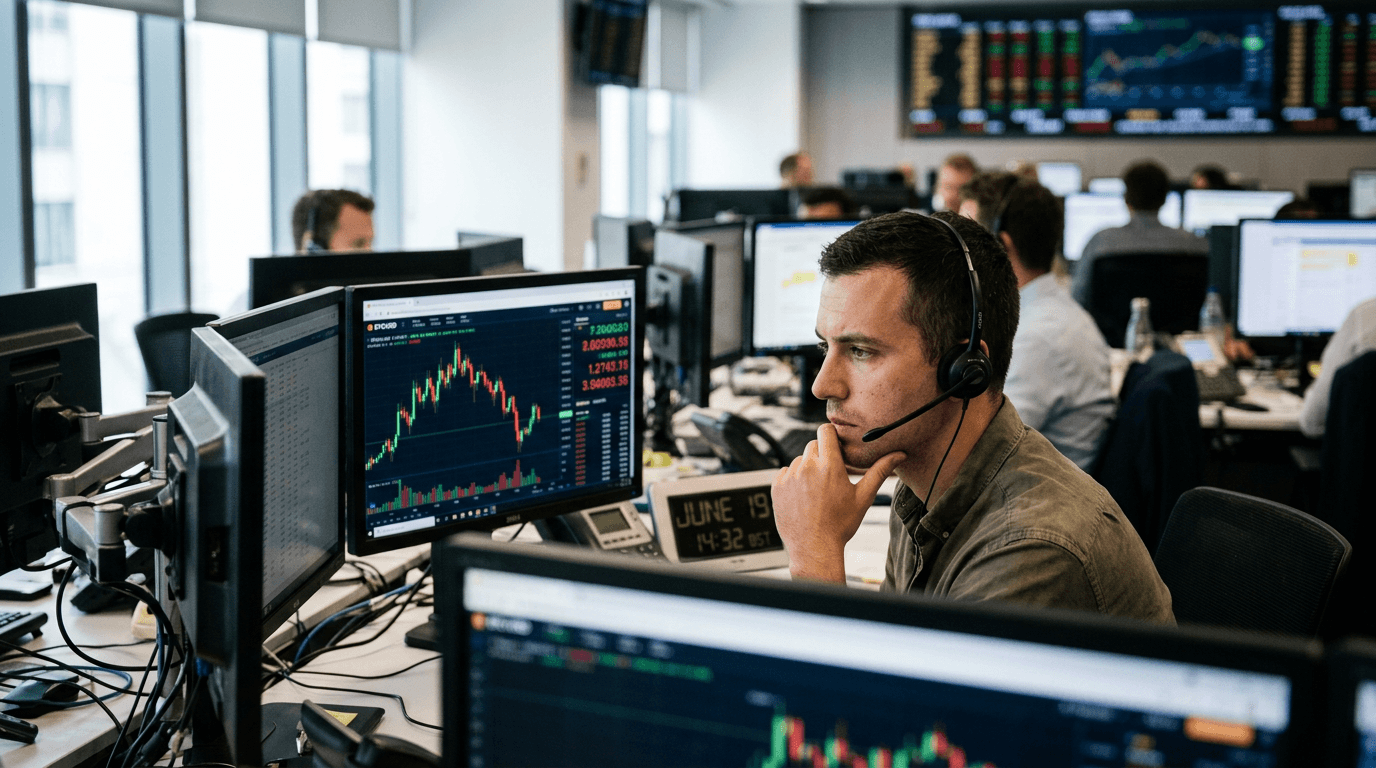
A single wick on a Binance one-minute chart can erase a billion dollars in paper wealth before a trader can blink. This technical reality is currently haunting the digital asset space as the mercury rises and liquidity thins. For those watching the ticker, the number sixty thousand has ceased to be a mere coordinate on a graph; it has become a gravitational well. The smart money is no longer wondering if the floor will be tested, but rather how long it will hold once the inevitable occurs.
Current pricing in the prediction sphere reflects this growing anxiety with startling clarity. The contract for Bitcoin hitting $60,000 in June is trading at 68 percent. In plain English, the crowd is saying there is a better-than-two-thirds chance that Bitcoin will touch or breach that level within the month. Meanwhile, the contrarian position sits at a lonely 33 percent. This lopsidedness suggests that the bullish narrative, which sustained the asset through its post-ETF honeymoon, is finally fraying at the edges. The conviction behind these numbers is bolstered by a 24-hour trading volume of $355,967, contributing to a total pool of nearly three-quarters of a million dollars. This is not casual pocket change; it is a calculated hedge against a summer slump.
The Gravity of Sixty Thousand
The technical setup is unforgiving. Bitcoin has spent much of the last quarter oscillating in a range that tested the patience of even the most devout HODLers. But patience does not pay the bills for over-leveraged long positions. As the 50-day moving average hovers precariously around the $64,200 mark, the distance to sixty thousand feels like a short trip down a steep slide. Macroeconomic pressures provide the push. The Federal Reserve continues to signal a hawkish reluctance to cut interest rates, leaving risk assets to wither in a high-yield environment. When the dollar is strong, the digital gold shines a little less brightly.
The mechanics of this specific market are also worth a look. Because resolution depends on a single one-minute candle on Binance, the threshold for a "Yes" outcome is remarkably low. A brief flash crash or a localized liquidity event on one of the world’s largest exchanges is all it takes. Such volatility is not a bug in the crypto ecosystem; it is a fundamental feature. We have seen this movie before. Prices often overshoot to the downside to hunt for liquidity before finding a true bottom. The 68 percent probability reflects a collective recognition that Bitcoin is currently lacking a fundamental catalyst to propel it upward, leaving the path of least resistance pointing firmly down.
Liquidity and the Long Squeeze
Institutional interest, once thought to be a permanent floor, is proving to be more fickle than the enthusiasts predicted. Recent data shows a cooling in spot ETF inflows, with three of the last five trading days seeing net outflows totaling over $120 million. Without the constant buy-side pressure from Wall Street’s new toys, the organic market sell-off from miners—who are still adjusting to the post-halving reality of halved rewards—is starting to dominate the tape. Miners are forced sellers. They have electricity bills that cannot be paid in "diamond hands" memes.
The psychological impact of sixty thousand cannot be overstated. It is the line in the sand for the current bull cycle. If the price touches that level, it will likely trigger a cascade of stop-loss orders, potentially dragging the price even lower in a self-fulfilling prophecy of bearishness. This is precisely why the "Yes" side of the trade is attracting so much capital. It is a cynical bet, perhaps, but a rational one. The volatility index for Bitcoin remains elevated, and the lack of a clear regulatory or macroeconomic tailwind suggests that the bulls are exhausted. They are out of breath.
Ultimately, the current pricing of 68 percent represents a sober assessment of a market that has run too far, too fast, without establishing proper structural support. While the 33 percent of "No" voters are banking on a sudden burst of enthusiasm or a surprise dovish turn from the central banks, the weight of the evidence favors the bears. The sixty thousand mark is a magnet. And magnets, by their very nature, are difficult to resist once you get close enough. Investors should prepare for a cold snap in the middle of June.


Comments
to join the conversation.
No comments yet. Be the first to share your thoughts.