

One hundred and ten dollars is the price point where the global economy begins to choke. At that level, the cost of moving a gallon of diesel or a ton of freight transitions from a manageable overhead to a structural crisis. While the current price of West Texas Intermediate (WTI) remains comfortably below that threshold, a quiet accumulation of capital suggests that a significant portion of the financial world is bracing for a shock. Specifically, the probability of WTI crude oil touching $110 at some point in May 2026 now sits at 38%. This is not a consensus view, but it is a substantial one.
For the uninitiated, a 38% probability means that for every dollar risked on the "Yes" outcome, a participant stands to collect more than double their investment if the price spikes. Conversely, the "No" side is priced at 63%, reflecting a cautious optimism that the ceiling will hold. This is not mere speculation. Total trading volume for this specific timeframe has surpassed $3 million, with over $216,000 changing hands in the last 24 hours alone. When that much liquidity pours into a long-dated energy contract, it is rarely the work of hobbyists. This is institutional hedging dressed up as a forecast.
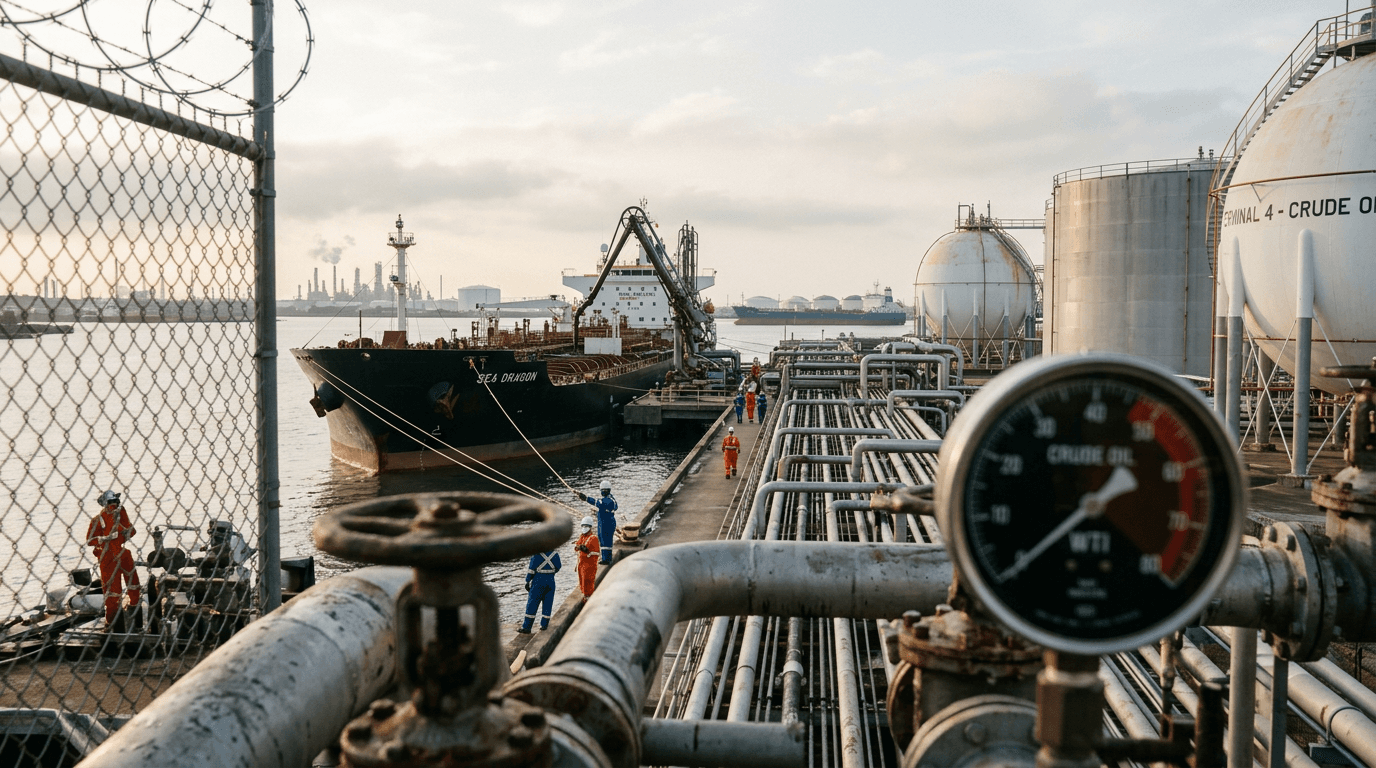
The mechanics of the trade are unforgiving. The resolution depends on a single one-minute candle. If the active month futures contract hits $110.00 for even sixty seconds during a standard trading session in May 2026, the "Yes" holders win. This distinction is vital. One does not need a sustained rally or a fundamental shift in global demand to trigger a payout. One only needs a moment of pure, unadulterated panic. A drone strike on a critical refinery, a sudden blockade in the Strait of Hormuz, or a clerical error in a massive algorithmic trade could all do the work. Volatility is the friend of the 38%.
The Bull Case for Chaos
Why would nearly four out of ten participants back such a high number? The answer lies in the chronic underinvestment in upstream production. While the United States continues to pump record amounts of shale, the rest of the world is flagging. OPEC+ has demonstrated a ruthless commitment to price floors, frequently sacrificing volume to maintain fiscal stability in Riyadh and Abu Dhabi. Furthermore, the global spare capacity buffer is thinning. If a major supply disruption occurs in early 2026, there is very little slack in the system to absorb the blow. The $110 mark is only a single geopolitical tantrum away.
Inflation also plays a quiet role. By May 2026, the purchasing power of $110 will be lower than it is today. In real terms, a move to triple digits becomes easier to achieve with every passing month of 3% or 4% headline inflation. The "Yes" side is essentially a bet on the fragility of the status quo. It is a bet that the current period of relative energy stability is an anomaly rather than the new normal.
The Case for a Ceiling
The 63% majority, however, has history on its side. Demand destruction is a powerful force. When oil prices flirt with the century mark, consumers stop driving, airlines trim schedules, and the manufacturing sector pulls back. This reflexive cooling usually acts as a natural governor on price spikes. Furthermore, the transition toward electric vehicles and increased energy efficiency in the Eurozone and China is beginning to bite into the core of global demand growth. China’s economic trajectory is particularly concerning for oil bulls. The days of double-digit GDP growth and insatiable thirst for crude are over. A sluggish Chinese property sector and a rapidly aging population suggest that the world’s largest importer may no longer be the reliable engine of price appreciation it once was.
The technical structure of the WTI market also favors the bears. The "active month" roll schedule described in the contract rules ensures that participants are tracking the most liquid, front-end price. Historically, these contracts struggle to maintain high premiums unless there is an immediate, physical shortage of oil at the Cushing hub. Without a localized crisis, the gravity of high interest rates and a strong dollar will likely keep the price pinned below the $100 mark. The 63% odds reflect a belief that while the world is messy, it is not yet broken.
One must consider the conviction levels evidenced by the $3,019,276 in total volume. This is a high-conviction environment. The spread between those expecting a spike and those expecting stability is narrowing. In the world of energy, the most dangerous move is the one no one sees coming. Right now, a significant minority sees $110 coming, and they are putting their capital behind that vision. If they are right, the 1-minute candle of May 2026 will be the most expensive sixty seconds of the decade. If they are wrong, the 63% will collect a steady, if unglamorous, profit on the back of global inertia. The numbers suggest that while the peak is unlikely, it is far more plausible than the current spot price would suggest.

Comments
to join the conversation.
No comments yet. Be the first to share your thoughts.