

Ninety-six million dollars is a staggering sum to bet on a certainty that does not exist. In the cold, numerical theater of prediction markets, the prospect of the Federal Reserve raising interest rates in March 2026 has been effectively reduced to zero. Traders have moved nearly $8 million in the last twenty-four hours alone to cement a position that was already granite: there will be no hike. The market is not merely leaning toward a pause or a cut; it has deleted the possibility of a move upward from the collective consciousness. This is what a consensus looks like when it reaches its terminal velocity.
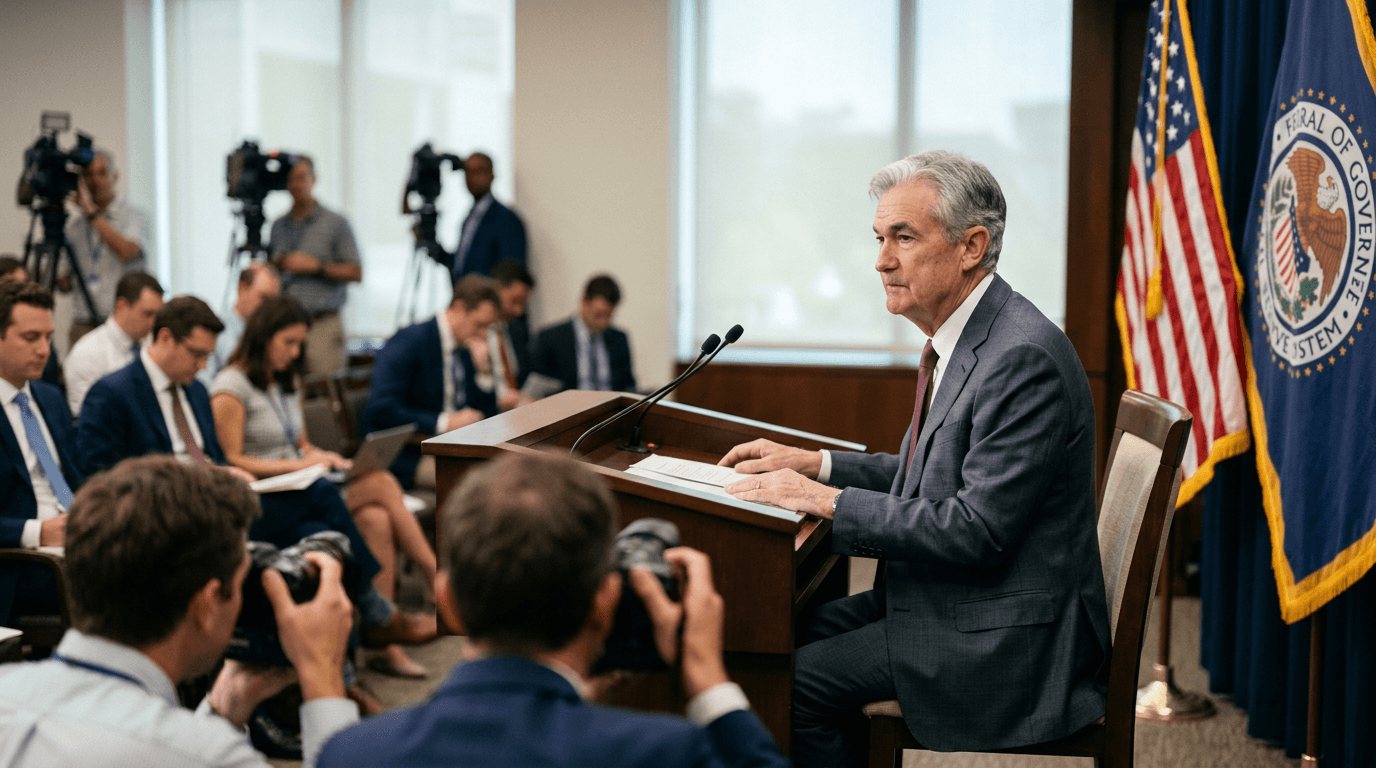
The mechanics of the trade are brutal in their simplicity. At a 0% price for the 'Yes' outcome, the market is signaling that the era of aggressive tightening is not just over, but buried under several fathoms of economic data. To understand why such a massive volume of capital has settled on this specific shore, one must look at the broader trajectory of the Federal Open Market Committee’s recent posturing. Jerome Powell has spent the better part of the last two quarters pivoting from an inflation-fighting zealot to a cautious steward of the 'soft landing.' The data supports the shift. With core Personal Consumption Expenditures (PCE) inflation cooling toward the 2.6% mark and labor market tightness finally showing signs of structural fatigue, the appetite for further tightening has evaporated.
Wall Street is often wrong, but it is rarely this unified in its error. The sheer volume—$96,527,098—suggests that this is not the work of speculative retail hobbyists. This is institutional conviction. When nearly $100 million flows into a binary 'No' outcome for a rate hike two years away, it reflects a fundamental belief that the neutral rate is significantly lower than current levels. Traders are betting that by March 2026, the conversation will be about how deep to cut, not whether to resume the climb. The Fed’s own 'dot plot' projections for the long-run federal funds rate hover around 2.5%, a far cry from the restrictive territory we have occupied recently.
There is a specific kind of arrogance in a 100% probability. Financial history is littered with the corpses of 'sure things' that were derailed by exogenous shocks—a sudden energy crisis, a geopolitical rupture in the Taiwan Strait, or a recursive spike in wage-price spirals. Yet, the traders here are undeterred. They are looking at a domestic economy where the Sahm Rule—a historically reliable recession indicator—is being whispered in the hallways of the Eccles Building. If the economy is slowing enough to trigger recession fears, the idea of a rate hike in the spring of 2026 feels like a fantasy from a different century.
The Gravity of the Zero
The pricing of this market creates a fascinating vacuum. Because the 'No' side is trading at 100%, there is no longer any profit to be made by betting with the consensus unless one is looking to park massive amounts of capital as a proxy for a high-yield savings account—assuming the platform’s counterparty risk is negligible. Conversely, the 'Yes' side is a lottery ticket with the lowest possible odds. For a hike to occur in March 2026, the U.S. would likely need to experience a second wave of inflation more virulent than the first. We would need to see a total failure of current monetary policy to anchor expectations. The market says the probability of that failure is statistically indistinguishable from zero.
We should be skeptical of such absolute confidence. While the headline numbers look settled, the Federal Reserve remains an intensely reactive body. They are data-dependent to a fault. If the Consumer Price Index were to unexpectedly re-accelerate in late 2025, the very traders currently shorting the hawk narrative would be forced into a violent and expensive retreat. But for now, the money is flowing in one direction. The conviction is so high that the $7.9 million traded in the last day acts as a final seal on the debate.
Ultimately, this market reflects a broader surrender. The hawks have not just left the building; they have left the zip code. By March 18, 2026, the Fed will have had dozens of opportunities to recalibrate its stance, yet the smart money is betting that the path only leads down or sideways. In a world of infinite variables, finding a $96 million consensus is rare. Whether that consensus is a brilliant foresight or a monumental display of groupthink is a question that only the passage of time can answer, but for the moment, the bears have won the argument by total forfeit.


Comments
to join the conversation.
No comments yet. Be the first to share your thoughts.