

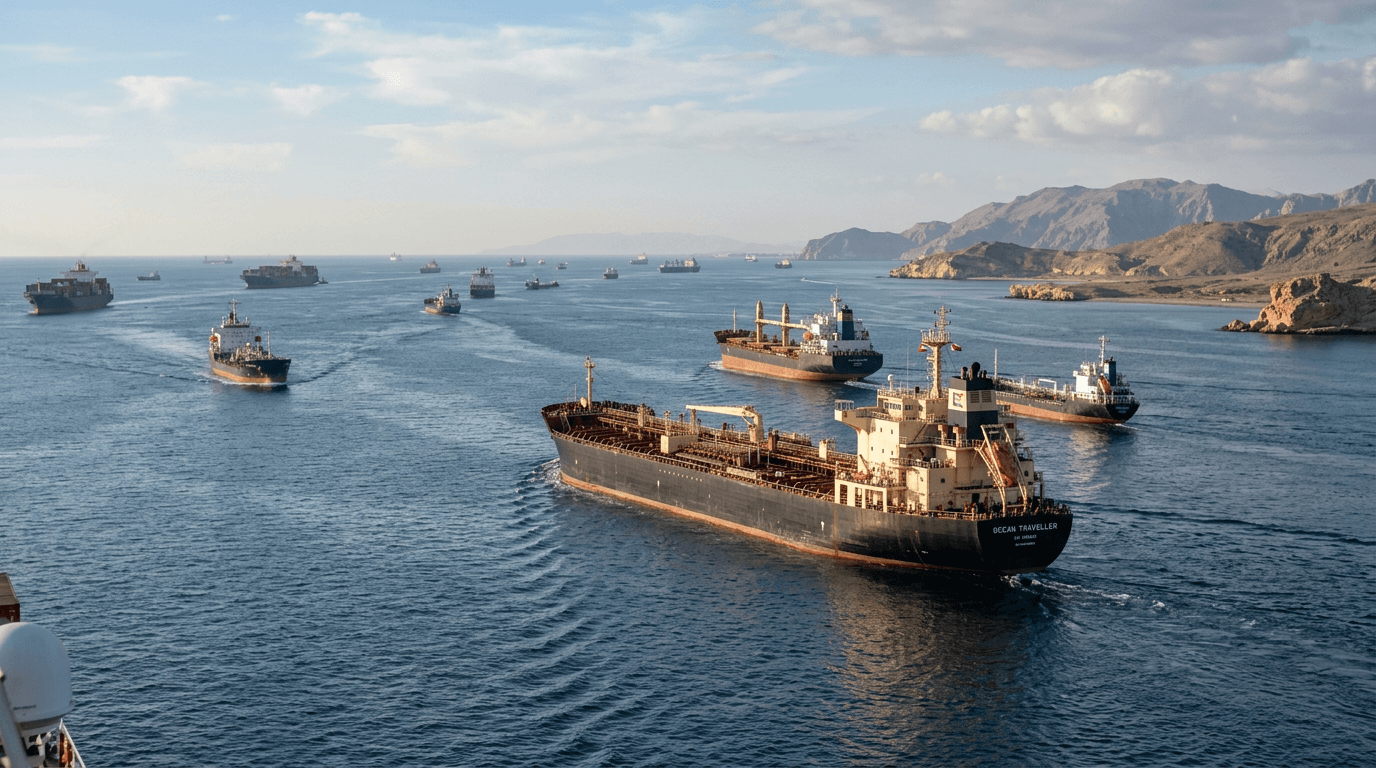
Twenty-one million barrels of oil transit the Strait of Hormuz every twenty-four hours. That represents roughly twenty percent of global liquid petroleum consumption squeezed through a maritime corridor that narrows to just twenty-one miles at its most precarious point. For decades, the presence of the U.S. Fifth Fleet has acted as a silent subsidy for global energy markets, suppressing the 'war risk' premiums that insurers tack onto every tanker hull. Now, as the specter of a second Trump term looms over the Pentagon, the price of security is being recalculated in real-time by those with skin in the game.
Currently, the consensus is one of profound skepticism. The chance that Donald Trump will restart 'Project Freedom'—a robust military initiative to escort commercial vessels through these volatile waters—sits at a measly 11 percent. To put that in the vernacular of the trading floor, the crowd is selling the hype. For every dollar required to back a 'No' outcome, a participant only needs to risk eleven cents to argue for a 'Yes.' This isn't just a lack of confidence; it is an active dismissal of the idea that the incoming administration will prioritize conventional maritime policing in the Persian Gulf.
The conviction behind this skepticism is underscored by a sudden surge in liquidity. In the last twenty-four hours alone, $440,406 has changed hands, bringing the total volume for this specific inquiry to nearly three-quarters of a million dollars. When nearly half a million dollars moves in a single day on a binary outcome, it suggests a shift from speculative retail interest to institutional-grade positioning. The 'No' side, currently trading at 89 percent, is being defended with significant capital. Those buying 'No' are betting that the transactional nature of the Trump foreign policy doctrine will find the cost of a sustained escort mission unpalatable.
The Logistics of America First
The gap between campaign rhetoric and carrier strike group deployment is often wider than the Strait itself. During his first term, Trump authorized Operation Sentinel, a predecessor to the 'Project Freedom' concept, but his enthusiasm for protecting third-party commercial interests was always tempered by a demand for burden-sharing. He famously complained that the United States was protecting tankers for wealthy nations like China and Japan for 'zero compensation.' There is little reason to believe his second act will feature a more charitable disposition toward global commons.
Military readiness also dictates the odds. The U.S. Navy is currently grappling with a recruitment crisis and a maintenance backlog that has left its surface fleet stretched to a breaking point. With the Red Sea already consuming a disproportionate share of destroyer sorties to counter Houthi drones and missiles, the appetite for a new, labor-intensive escort program in the Persian Gulf is nonexistent within the professional officer corps. Adding a dedicated escort service would require diverting assets from the Indo-Pacific—the one theater Trump’s advisors consistently cite as the existential priority. The math simply does not add up for a return to 1980s-style tanker wars.
A Shift in Iranian Calculus
Tehran is watching these figures as closely as any hedge fund manager in Greenwich. If the U.S. military signals a withdrawal from the escort business, the leverage shifts. However, the 11 percent 'Yes' price reflects a belief that Trump may prefer targeted, kinetic strikes over the 'boring' work of maritime loitering. Escorting ships is a defensive posture; Trump’s preferred brand of deterrence is offensive and unpredictable. A program like Project Freedom is too structured, too predictable, and too expensive for an administration that views global alliances through the lens of a balance sheet.
The $728,666 total volume indicates that this is one of the more heavily scrutinized geopolitical questions currently available to traders. This isn't a sleepy corner of the market. It is a high-conviction environment where the smart money has decided that 'Project Freedom' is a brand name destined for the archives rather than the masthead of a destroyer. While a sudden seizure of a U.S.-flagged vessel could theoretically trigger a reactive deployment, the specific requirement for a definitive 'announcement' to restart the program by May 2026 makes the 'Yes' position a very difficult hold.
The 89 percent probability for 'No' reflects a cold-eyed assessment of the new Washington. The era of the U.S. Navy serving as a free global concierge service for oil tankers is ending. If shipping magnates want protection in the Strait of Hormuz, they may soon find that the 'Project Freedom' of the future comes with a bill that the Trump administration expects them to pay in full. Until that check clears, the ships will sail alone.

Comments
to join the conversation.
No comments yet. Be the first to share your thoughts.